
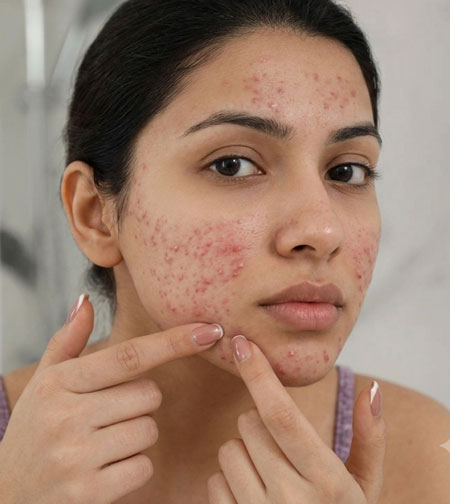
Acne is one of the most common skin conditions and can affect teenagers as well as adults. It can appear as blackheads, whiteheads, pimples, painful nodules, or cysts and commonly affects the face, chest, shoulders, and back. Acne develops when hair follicles become clogged with oil and dead skin cells, followed by inflammation.
Although acne is common, it is not simply a result of having "dirty skin." The causes can be different for each person, which is why understanding the underlying factors is important for choosing appropriate treatment.
Acne usually develops due to a combination of excess oil production, clogged pores, inflammation, and changes occurring around the hair follicles.
Acne does not look the same in everyone. It can include:
Knowing the type and severity of acne helps a dermatologist decide on an appropriate treatment approach.
There is no single acne treatment that works equally well for everyone. Treatment is selected according to the type and severity of acne, skin type, age, medical history, and individual concerns.
Some simple habits can also support acne management.
1. Follow a Gentle Skincare Routine
Wash your face gently, generally up to twice a day and after heavy sweating. Avoid aggressive scrubbing, as irritation can make acne worse.
2. Choose Acne-Friendly Products
Look for skincare, moisturizers, sunscreens, and cosmetics labelled non-comedogenic or oil-free.
3. Avoid Picking or Popping Pimples
It can be tempting to squeeze a pimple, but doing so may increase inflammation and raise the risk of dark spots and acne scars.
4. Be Consistent With Treatment
Acne treatment usually takes time. Depending on the treatment, improvement may take several weeks, so frequently changing products may irritate the skin and make it harder to assess what is actually helping.
5. Protect Your Skin From the Sun
Sun protection is important, particularly because acne and some acne treatments can make pigmentation more noticeable or increase skin sensitivity. A broad-spectrum, non-comedogenic sunscreen is generally recommended.
Consider consulting a dermatologist if:
Some conditions can look similar to acne but require different treatment, so an accurate diagnosis is important.
Acne is sometimes treated as a temporary cosmetic problem, but persistent or severe acne can have longer-term effects. Acne can worsen over time and may leave permanent scars or post-inflammatory dark spots. Early and appropriate management can help reduce these risks.
Severe acne can also affect self-confidence and emotional well-being, making professional support important when acne starts affecting daily life.
A dermatologist first evaluates the type and severity of acne before recommending treatment. Depending on the individual case, treatment may include topical medications, oral medications, chemical peels, laser or light-based treatments, or other dermatological procedures.
The goal is not only to control existing breakouts but also to prevent new acne and reduce the risk of scarring.
Acne is common, but you don't have to simply wait for it to disappear. The right treatment depends on what is causing your breakouts and how your skin responds to treatment.
Dr. Krupa Ajmera Modi provides personalized dermatological care to help patients understand their acne, manage active breakouts, and work towards healthier-looking skin.
Book a consultation to get a personalized acne assessment and treatment plan.