
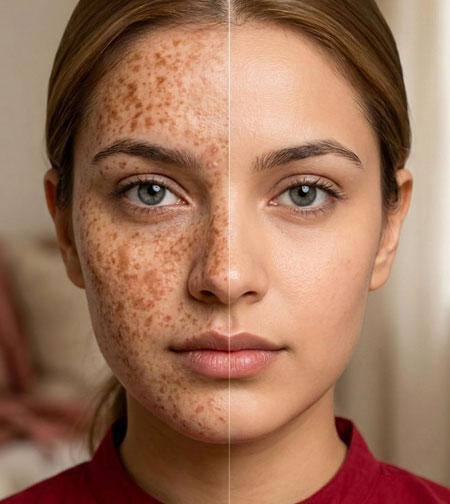
Pigmentation is a common skin concern in which certain areas of the skin appear darker or more uneven in colour than the surrounding skin. It can affect the face, neck, hands, and other exposed areas of the body and may occur due to several different factors.
Uneven skin tone can develop gradually and may become more noticeable after sun exposure, hormonal changes, acne, inflammation, or certain skin conditions. Understanding the cause of pigmentation is an important first step towards choosing the right treatment.
Skin pigmentation is mainly related to melanin, the natural pigment responsible for giving our skin its colour. When the skin produces excess melanin in certain areas, darker patches or spots may develop.
Common factors that can contribute to pigmentation include:
Pigmentation can appear in different forms. Identifying the type of pigmentation is important because different conditions may require different treatment approaches.
Since different pigmentation conditions can look similar, a dermatological examination can help identify the likely cause and guide appropriate treatment.
Pigmentation management usually requires patience and consistency. The treatment approach depends on the cause, depth, duration, skin type, and severity of pigmentation.
1. Use Sunscreen Regularly
Sun protection is one of the most important steps in
managing pigmentation. Regular use of a broad-spectrum
sunscreen can help protect the skin from UV exposure and
reduce the chance of pigmentation becoming darker.
2. Avoid Excessive Sun Exposure
Whenever possible, limit prolonged direct sun exposure.
Hats, umbrellas, protective clothing, and seeking shade
can provide additional protection.
3. Follow a Gentle Skincare Routine
Avoid aggressive scrubbing, excessive exfoliation, or
skincare products that cause burning and irritation.
Irritated skin may become more prone to pigmentation.
4. Do Not Pick or Squeeze Acne
Picking pimples can increase inflammation and may increase
the risk of post-acne dark marks and scarring.
5. Choose Skincare According to Your Skin Type
Products containing ingredients that support pigmentation
management may be recommended depending on your skin
condition. However, not every active ingredient is suitable
for every skin type.
6. Be Consistent With Treatment
Pigmentation often takes time to improve. Frequently
changing products or using multiple strong treatments
together can irritate the skin and may make pigmentation
more difficult to manage.
When pigmentation persists despite appropriate skincare, professional dermatological treatment may be considered. The treatment selected depends on the underlying cause and the individual's skin type.
Depending on the condition, a dermatologist may consider treatments such as:
Not all pigmentation is the same. Melasma, sun spots, post-acne pigmentation, and other pigmentary conditions can require different treatment approaches.
Using an inappropriate cream, peel, or laser treatment without identifying the underlying condition may cause irritation and, in some cases, make pigmentation more noticeable.
A dermatologist can assess the pattern, location, colour, duration, and possible triggers of pigmentation before recommending an appropriate treatment plan.
Consider consulting a dermatologist if:
Trying to treat pigmentation too aggressively can sometimes worsen the problem. Some common mistakes include:
Not every type of pigmentation can be completely prevented, but certain habits can help reduce the risk of worsening or recurring pigmentation.
Pigmentation is common, but the right treatment depends on its underlying cause. What works for one person may not be appropriate for another, particularly when pigmentation is related to hormonal changes or sensitive skin.
With proper evaluation, personalized skincare, sun protection, and appropriate dermatological treatments, pigmentation can be managed more effectively.
Dr. Krupa Ajmera Modi provides personalized dermatological and aesthetic care for pigmentation, uneven skin tone, acne marks, and other skin concerns, with treatment plans tailored to individual skin type and needs.
Consult Dr. Krupa Ajmera Modi for a detailed skin assessment and personalized pigmentation treatment plan.